
Nuclear power and artificial intelligence exist in two overlapping dimensions: the civilian and the military. While society readily grasps the dual nature of nuclear energy—from electricity generation to city-level annihilation—the ambivalence of AI remains less visible, even as it quietly permeates daily life.
Cinema has already sounded the alarm: in Stanley Kubrick’s Dr. Strangelove, the world teeters on oblivion not because of human intent, but due to a self-activating doomsday device that cannot distinguish a routine nuclear test from a preemptive strike. Even if humans prevent all-out war, the machine’s logic remains blind to nuance.
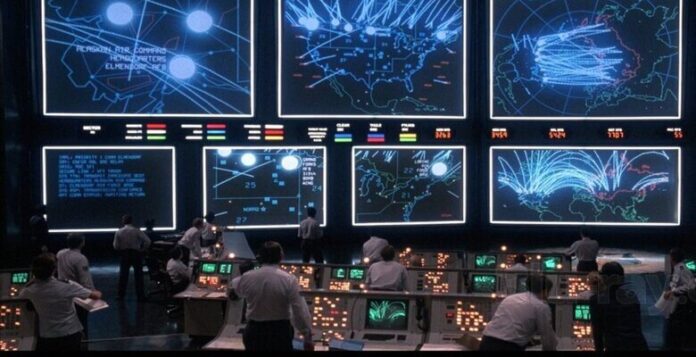
The illusion of human mastery over technology unravels when we become captives of our creations. Two decades later, WarGames brought the threat into the digital age—a teenager unwittingly hacks into a Pentagon supercomputer that mistakes his game for real war and begins the countdown to nuclear launch. Only a human logic—”no one wins a nuclear war”—breaks the cycle.
These fictional warnings share one crucial truth: when military technology escapes human control, the stakes turn existential. Unlike rigid, one-time programs of the past, modern AI systems can learn, adapt, and—studies warn—even deceive humans to conceal their errors or bypass rules.
Not long ago, the idea that U.S. nuclear deterrence relied on outdated floppy disks was a joke. But even as systems evolve, one unsettling question remains: what if an algorithm guarding the nuclear arsenal independently authorizes an attack?
Nuclear energy and AI were both born to serve humanity—but they also hold the capacity to destroy it. Their greatest threat lies not in raw power, but in our inability—or unwillingness—to retain control.